Damp Coming Through the Bricks: What It Is and What It Costs
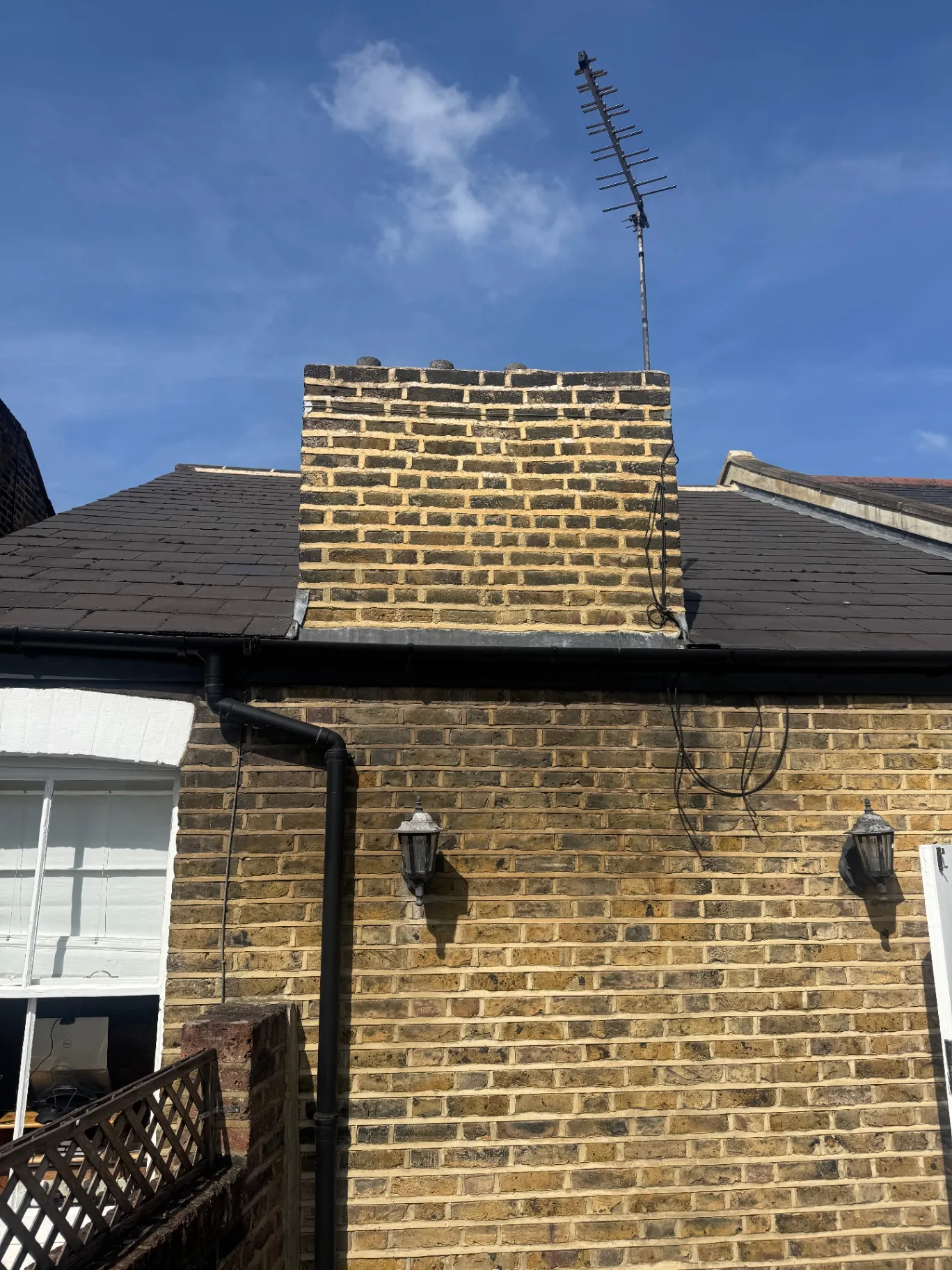
Damp that comes through the brick is penetrating damp. A builder prices the outside of the wall — open joints, hard cement pointing on soft brick, spalled brick faces, cracked render or the chimney lead — and the repair usually lands somewhere between £900 and £5,000. A chemical damp-proof course doesn't stop rain coming in through the face of a wall, so don't pay for one to fix this.
Those are a builder's 2026 figures, from someone who doesn't sell damp treatments and doesn't quote for the work. If you're not sure yet which kind of damp you have, start with the damp diagnosis tool or rising damp versus penetrating damp. This page is for when the brick itself is the way in.
Six ways rain gets through a brick wall
| What you can see | What a survey usually says | What to price | Typical 2026 cost |
|---|---|---|---|
| Open or washed-out joints on a solid wall | "Dampness to external walls", high readings after rain | Repoint the affected area | £1,500 – £4,000 |
| Hard grey cement pointing on soft brick | "Defective pointing", "spalled brickwork" | Cut the cement out, repoint in lime | £1,500 – £4,000, more if many bricks are replaced |
| Brick faces blown off | "Spalled brickwork", "frost damage" | Replace the worst bricks and repoint | Within £900 – £5,000, depending how many faces have gone |
| Cracked or hollow render | "Render cracked / blown", damp inside that wall | Local repair, or re-render the affected area | £1,500 – £4,000; a whole elevation £2,500 – £9,000 |
| Damp on the chimney breast | "Possible damp", staining to the breast, often upstairs | Repoint the stack and renew the lead | £900 – £3,500; a full rebuild only if the stack has failed |
| Damp patches after rain on a cavity wall | Isolated patches, sometimes just above the damp-proof course | Clear the cavity and weep holes, fix pointing and ground levels | Usually far less than an injected damp course |
All of these figures are already used elsewhere on this site, in the RICS survey repair cost calculator and the damp guides. The survey red-flag band for penetrating damp as a whole is £900–£5,000.
Open joints on a solid wall
Houses built before about 1919 usually have solid brick walls with no cavity. Rain soaks into the face and dries back out, and that only works while the joints are full. Once the mortar has washed out, driven rain gets into the joints and through to the inside, and you see damp on the inside face of that wall, worse after a storm.
The repair is repointing the affected area: often £1,500–£4,000. Repointing a whole elevation is more like £1,800–£7,000. On a solid wall it should be done in lime mortar.
Don't pay for: an injected damp-proof course. Moisture coming sideways through the joints has nothing to do with the ground.
Hard cement pointing on soft brick
This is the one most damp guides miss. A lot of older houses were repointed at some point in hard cement mortar. Cement is stronger and less porous than the soft brick around it, so water that gets into the wall can't leave through the joints. It leaves through the brick instead, and in a frost the face of the brick blows off. You see crumbling, spalled bricks with the cement joints standing proud around them.
The repair is to cut the cement out carefully and repoint in a lime mortar that suits the brick, replacing bricks that have lost their face. Budget the same £1,500–£4,000 for an affected elevation, more if a lot of bricks have to be cut out and replaced. It's still inside the wider £900–£5,000 penetrating damp band.
Don't pay for: painting over it, or repointing in cement again. Both trap more water in the brick.
Brick faces blown off
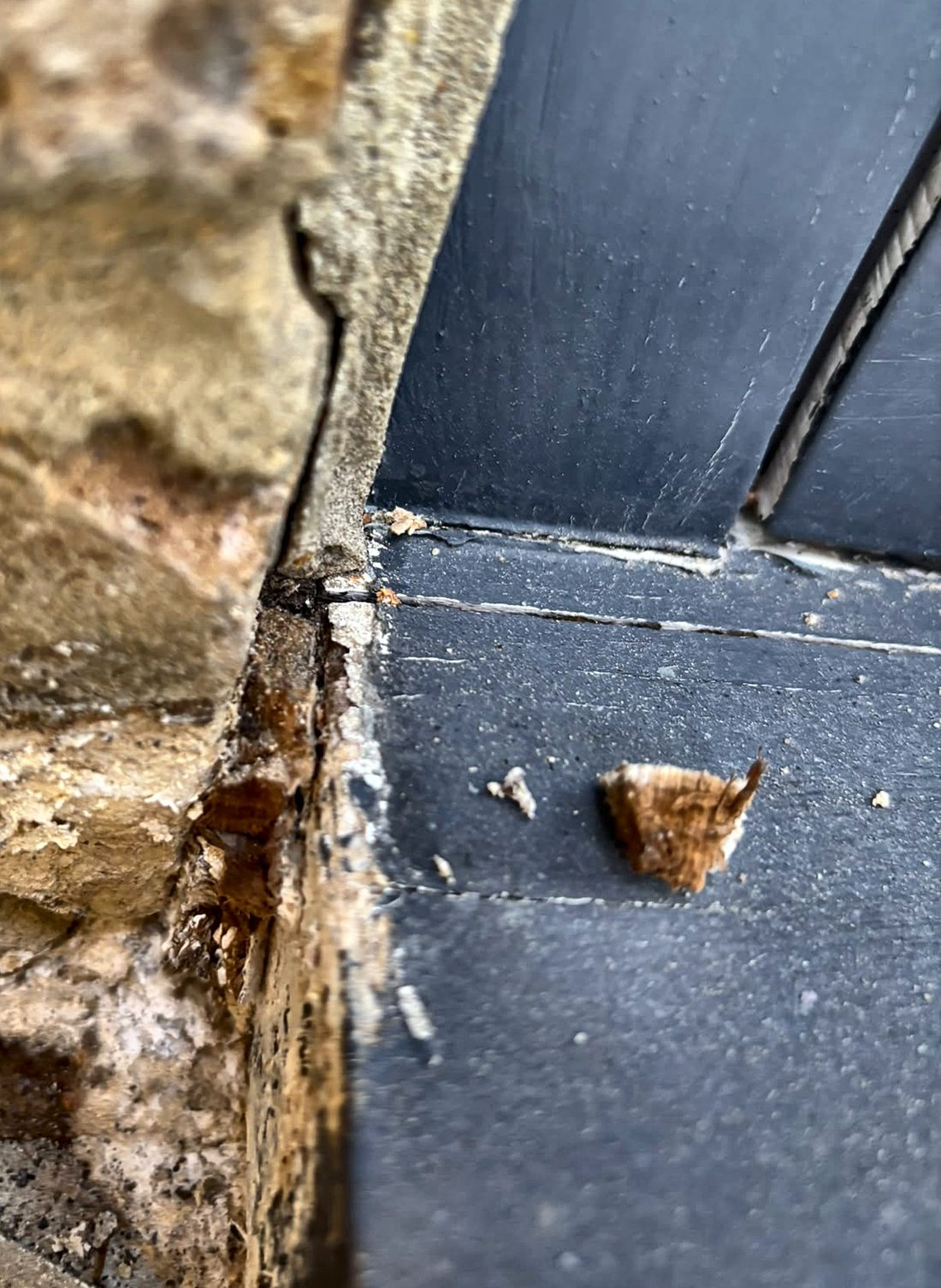
Spalling means the face of the brick has gone, usually from frost acting on a brick that stays wet. Once the face has gone the soft core soaks up even more water. Replacing the worst bricks and repointing is the job, and it's priced within the £900–£5,000 band depending on how many faces have gone. A whole elevation of soft red brick is the top of that range, not a separate mystery number.
Don't pay for: a non-breathable sealer or coating over the face. It holds in the water that blew the face off in the first place.
Cracked render on brick
Render keeps rain off brick until it cracks. Then water gets in behind it at the crack, can't get out, and shows as damp on the inside of that wall. The render is the defect, not the wall. A local repair or re-rendering the affected area is often £1,500–£4,000. Hacking off and re-rendering a whole elevation, with scaffold, is more like £2,500–£9,000.
Check where the render stops at the bottom, too. Render carried down over the damp-proof course bridges it, which is one of the most common things diagnosed as rising damp.
Don't pay for: injecting the inside of the wall. The crack outside keeps feeding water in.
Damp on the chimney breast
Staining on a chimney breast, often in an upstairs bedroom, is usually the stack above it: open joints, a cracked flaunching or split lead. The bedroom wall is where you see it, not where it starts. Repointing the stack and renewing the flashings is often £900–£3,500 with scaffold. A full rebuild is only needed if the stack itself has failed, and that's covered in how much a chimney rebuild costs.
Don't pay for: a damp-proof course, and don't read it as a sign of subsidence.
Damp patches after rain on a cavity wall
Most houses built after the 1930s have cavity walls, which shouldn't let rain across at all. When they do, the usual reasons are mortar dropped onto the wall ties during building that now carries water across, blocked weep holes above windows, failed pointing, or cavity wall insulation that has got wet. Raised ground outside does the same thing at the bottom of the wall: lowering a path or bed that sits above the damp-proof course is often £500–£2,000.
Don't pay for: tanking the inside, or an injected damp-proof course at around £3,500 for a ground floor, until the outside lets the water out.
What your survey will and won't tell you
A Level 2 survey will usually record high moisture readings and recommend investigation by a damp specialist. It will rarely tell you which outside defect to fix, because a surveyor's inspection stops at what can be seen and measured on the day. That's not a criticism of the survey; it's what it's for.
If you get a damp report, get an independent one, usually £250–£500, from someone who doesn't sell treatments. Then get the outside repair priced. Once the outside is fixed a solid wall can take months to dry, so don't replaster in a hurry, and when you do, use a breathable plaster on an old wall.
Frequently asked questions
What does damp penetration through bricks mean?
Rain coming through the wall itself: open joints, cement pointing that is too hard for the brick, blown brick faces, cracked render or a chimney defect. It's penetrating damp, not moisture rising from the ground, and the repair is on the outside of the wall.
How much does it cost to stop damp coming through brick?
Repointing or re-rendering the affected area is often £1,500–£4,000. Chimney repointing and new flashings are often £900–£3,500 with scaffold. Penetrating damp as a whole usually lands between £900 and £5,000. These are a builder's 2026 figures.
Will a damp-proof course stop damp coming through bricks?
No. An injected damp-proof course is aimed at moisture rising from the ground. Rain coming through the face of the wall keeps coming until the outside defect is repaired.
Why does cement pointing damage old brick?
Old soft brick needs a mortar that is weaker and more breathable than the brick. Hard cement traps water in the wall, so it leaves through the face of the brick instead of the joints, and in a frost the face spalls off. The repair is lime pointing and replacing the bricks that have lost their face.
What should my survey have said about damp in the brickwork?
A Level 2 survey will usually record high readings and recommend a damp specialist. It rarely says which outside defect to fix, because the inspection is visual. An independent damp report is usually £250–£500. Then get the outside repair priced by a builder.
Work it out yourself
Free tools built on real 2026 builder rates. No sign-up, no email.