Wall Tie Failure in a Survey: Signs, Risk and Replacement Cost
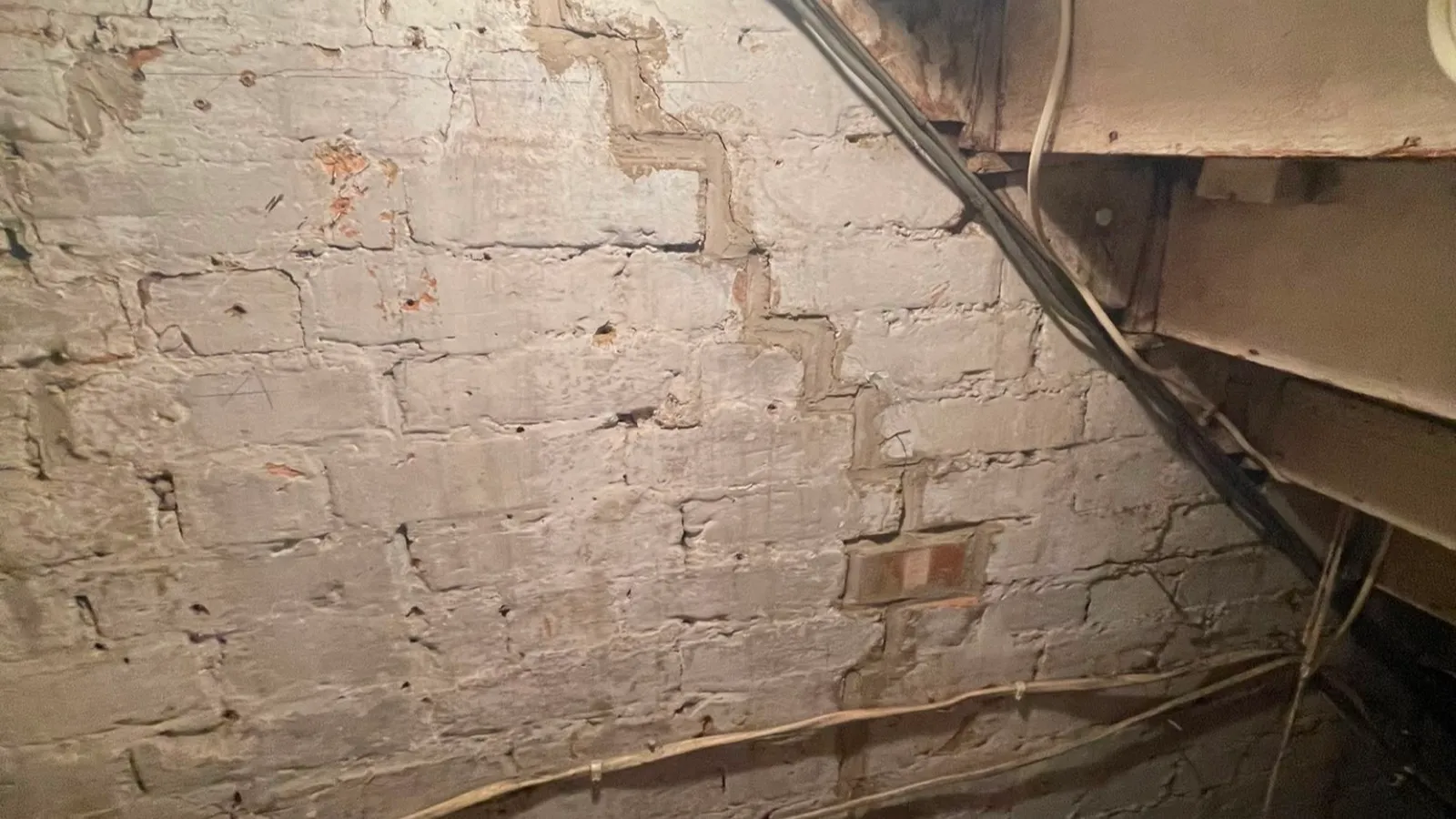
Wall ties are the metal ties that hold the two layers of a cavity wall together. When they rust, they swell, lift the brickwork and eventually stop doing their job. If your survey mentions possible wall tie failure, it's worth taking seriously, but it's also one of the more predictable repairs to price.
Which houses have wall ties
Only houses with cavity walls: two separate layers of brick or block with a gap between them. That's most houses built from the 1920s onwards. Most Victorian and Edwardian houses have solid walls and no wall ties at all, so if you're buying a solid-walled house, wall tie failure isn't the explanation for its cracks.
The houses most at risk were built roughly between the 1920s and 1981. Ties from that period were often galvanised steel with too thin a protective coating, and many are now well past their working life. Risk is higher near the coast, in exposed spots that take a lot of wind-driven rain, and where the original mortar was a black ash mix.
The signs
- Horizontal cracks in the mortar joints, repeating up the wall at regular intervals. Ties were usually laid every sixth course of brick, about 450mm apart vertically, and the cracks follow them.
- Brickwork bulging or leaning outwards, often worst high up, on gable ends and on walls facing the weather
- Horizontal cracks in render, if the brick is rendered over
- Lifting at the top of the wall, sometimes with the roof edge or window heads disturbed
The pattern is what separates it from other cracking. Subsidence and settlement usually crack diagonally. Lintel problems crack above and around openings. Wall tie failure cracks horizontally, at regular spacing, across a wide area.
How it's confirmed
A surveyor can only see the outside, so they'll usually recommend a wall tie inspection. A specialist drills a small hole and looks into the cavity with a borescope, or uses a metal detector to find the ties and removes a brick to see their condition. It typically costs a few hundred pounds.
Be careful with free inspections from companies that sell tie replacement. They may be fine, but they have every reason to find a problem. An independent inspection, or a structural engineer's view if the wall has bulged, gives you a figure you can rely on.
What replacement involves
- New remedial ties are drilled through the outer layer into the inner layer at closer spacing than the originals, and fixed with resin or a mechanical grip. They're stainless steel, so they won't rust.
- The old ties are either left if they're stable, or isolated or removed where they're still rusting and pushing the brickwork apart.
- The cracks are raked out and repointed.
- A badly bulged section may need taking down and rebuilding, which is where the cost climbs.
What it costs
My rough 2026 figures for a typical house:
- Wall tie inspection: a few hundred pounds
- Remedial ties to a typical semi-detached house: £2,500–£9,000, depending on how many walls need doing and access
- Rebuilding a bulged section of outer wall: from about £3,000 upwards, more on a gable with scaffolding
Wall tie failure isn't subsidence, so it isn't normally covered by buildings insurance. It's treated as gradual deterioration, which makes it a fair item to price into a renegotiation.
Before you exchange
- Check the age and construction. If the house has solid walls, ask your surveyor what else could explain the cracking.
- Get an independent wall tie inspection if the surveyor recommends one.
- Ask the seller whether ties have ever been replaced. A guarantee for previous replacement is worth asking your conveyancer to check.
- Get it priced and add it to your list. See how much you can negotiate off after a survey.
Related: cracks in walls: subsidence, settlement or thermal movement · failed cavity wall insulation · crack severity checker
Frequently asked questions
What are the signs of wall tie failure?
Horizontal cracks in the mortar joints repeating at regular intervals up the wall, usually about every sixth course of brick, plus bulging or leaning brickwork, horizontal cracks in render and lifting at the top of the wall.
Which houses are at risk of wall tie failure?
Houses with cavity walls built roughly between the 1920s and 1981, when ties often had too thin a protective coating. Risk is higher near the coast, in exposed locations and where black ash mortar was used. Solid-walled Victorian and Edwardian houses have no wall ties.
How much does wall tie replacement cost?
For a typical semi-detached house, remedial wall ties usually cost £2,500 to £9,000 depending on how many walls need doing and access. Rebuilding a badly bulged section costs more, from about £3,000 upwards.
Does buildings insurance cover wall tie failure?
Usually not. Wall tie corrosion is treated as gradual deterioration rather than an insured event like subsidence, so the cost normally falls on the owner.
Is wall tie failure a reason to pull out of a purchase?
Not usually on its own. It is a well-understood repair that can be inspected and priced before exchange. It becomes a bigger concern if a wall has bulged badly and needs rebuilding, or if nobody can price it before your exchange date.
Can wall tie replacement be priced without a site visit?
The likely range can. Tie replacement is priced mainly on wall area, so the house type and elevations described in the survey give a builder a sound figure. What confirms that the ties have actually failed is a specialist's borescope check, which no one can do from a report.
Work it out yourself
Free tools built on real 2026 builder rates. No sign-up, no email.