How to Get a Builder's Ballpark Figure on a House You Want to Buy
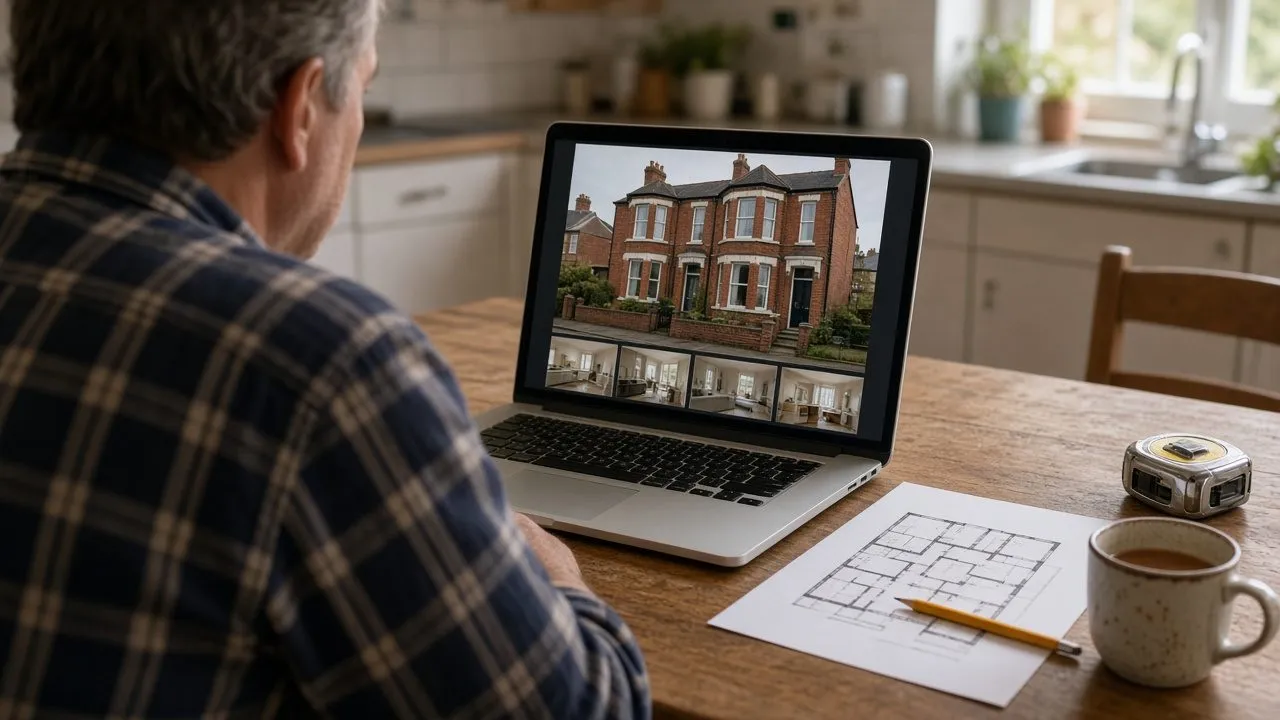
Most people who find me have typed something like "ask a builder online" or "can a builder give me a rough price" into Google, usually late at night, usually with a listing open in the next tab. They've seen a house they like, it obviously needs some work, and they want to know one thing before they offer: roughly what am I letting myself in for?
That's a fair question, and it's the right moment to ask it. What you need at that stage isn't a quote. It's a builder's ballpark figure: an honest range from someone who has priced and done this kind of work, so you can decide whether the house still makes sense at the asking price. This guide explains what a ballpark is, how an experienced builder works one out remotely, what to send so it's actually useful, and how to tell whether the person giving it is worth listening to.
What is a builder's ballpark figure, and how is it different from a quote?
A ballpark is a range, worked out from what can be seen and what's been described, with the assumptions written down. A quote is a fixed price for a defined job, written after someone has measured up, opened things up where they need to, and agreed a specification with you.
You need both, but at different times:
- Before you offer, you need a ballpark. It tells you whether the work is a bit of tidying up or a project that changes what the house is worth to you.
- After the survey, you need the survey items priced. A builder can price those from the report itself, because the surveyor has already done the site visit. I've explained how that works in can a builder quote without a site visit.
- Before you sign with a contractor, you need proper quotes. Getting quotes after the survey, before exchange covers who to call and how to get access.
The mistake I see most is people treating a ballpark as a quote, or waiting for quotes before they know whether the house is even in their range. A ballpark isn't binding on anyone (the difference is set out in quote or estimate: is a builder's quote legally binding?), but it's what stops you offering blind.
Can an experienced builder give you advice online about a house you want to buy?
Yes, within limits, and a good one will tell you where those limits are.
From a listing, a floor plan and a decent set of photos, I can usually tell you:
- which jobs are cosmetic and which are likely to be real money
- what the age and construction of the house usually mean for wiring, plumbing, roofs and damp
- what looks like it has been altered (an extension, a loft, a knocked-through wall) and what paperwork you should ask the agent for
- which RICS survey level to book, and what to ask the surveyor to look at closely
- a ballpark range for the work you can see, and the work you'd want to do
What I can't do from photos is see inside the walls, under the floors or behind the boarding in the loft. Nobody can. A photo flattens scale and hides access, and access on a roof or chimney can be a big part of the cost. So a remote ballpark always comes with its assumptions spelled out, and it gets tighter once you have a survey to work from.
How a builder actually works out a ballpark
There's no secret formula, but there is a method. When I put a range on a house, this is roughly the order I work in.
1. Break it into jobs. "It needs updating" isn't a job. A rewire is a job. A new kitchen is a job. Re-plastering two rooms after the rewire is a job. Once it's a list, each line can be thought about separately.
2. Get the quantities from the floor plan. Room sizes, number of rooms, floor area, how many windows. Most of a ballpark is quantity times a sensible rate, and the floor plan is where the quantities come from.
3. Read the condition from the photos. Is the kitchen dated but working, or failing? Is that ceiling stain old, or is it live? Condition decides whether something is a "now" job or a "one day" job, and that matters more to your offer than the price itself.
4. Settle on a specification. A budget kitchen and a mid-range one are different jobs. Part of a ballpark is me asking what you actually want, because "renovate the bathroom" can mean almost anything.
5. Allow for the house, the location and the access. Older houses hide more. Terraces with no rear access cost more to work on. Prices vary across the country. Scaffold, skips and parking all land on the bill.
6. Put the trades in order. Wiring and plumbing go in before plastering, plastering before the kitchen, and the roof before anything inside if water is getting in. Getting the order right is how people avoid paying twice, and it's often where the biggest saving is.
7. Add contingency for what can't be seen. Every older house holds a surprise. How much to hold back depends on the age of the house and how much is being opened up. I've written a separate guide on how much contingency to hold for building work.
If you want to try the sums yourself first, the free house renovation cost calculator and extension cost calculator give you a starting range. A calculator can't see the house, though, and that's the gap a builder fills.
What to send a builder for a useful ballpark
The more you send, the tighter the range. For a house you're thinking of buying, send:
- The listing link. Photos, floor plan, and often the EPC, which tells a builder a lot about insulation, heating and glazing.
- Your own viewing photos. Ceilings, the outside walls, the roof from the street and the garden, under the sinks, the fuse board, the boiler, and anything that made you pause.
- A short video walk-through if you took one. It shows how rooms connect in a way photos don't.
- What you want to do. "Live in it as it is for two years" and "open up the back and add a bathroom" are very different ballparks.
- Your survey, if you have one. That changes everything, because the surveyor's findings can be priced item by item.
- Your deadline. If you're offering or exchanging soon, say so.
If you're not sure what to photograph on a second viewing, the free property viewing checklist lists what a builder looks at, room by room.
Which kind of builder advice do you need?
Different questions need different help. Here's how I'd point you, depending on where you are:
- You have one quick question (one crack, one line in a survey, one photo): ask a builder one question, free.
- You've viewed a house and you're thinking about an offer: a pre-offer viewing review. Send the listing and your photos, and you get a builder's view on what the house is likely to cost you before you commit.
- Your RICS survey is back: a builder's second opinion on your survey, with each item prioritised and priced.
- You're planning an extension or renovation on the house: a feasibility discussion, which checks whether the plan and the budget actually meet.
- You've already got builders' quotes: a quote review, to see what's missing and what looks high or low.
How to tell if online builder advice is worth trusting
Anyone can call themselves a builder online. Before you rely on someone's ballpark, check these things.
They don't want the job. This is the big one. A builder who gives you a ballpark hoping to win the work has a reason to make it sound cheap, or sometimes frightening. I never quote for, carry out or refer the work I review, and I take no referral fees. Whoever you ask, find out whether they gain from the answer.
There's a real, named person. You should know who is reading your photos and be able to reply to them. Advice from a faceless form or a chatbot isn't the same thing.
They tell you what they can't see. An honest remote opinion lists its assumptions and tells you when something needs a surveyor or a structural engineer instead of a builder. If someone is certain about the inside of a wall from a photo, be careful.
They've done the work. Ask how long they've been on the tools and what kind of houses. I'm a carpenter by trade and I've spent nearly 30 years on UK building sites, which you can read about on our story.
Their reviews are real and checkable. Look for reviews on Google or Trustpilot that you can click through to, not quotes on a page with no source.
The same checks apply when you come to hire someone. My guide to checking a builder is legit goes through registrations, accreditations and the warning signs.
Using a ballpark when you buy
A ballpark is only useful if it changes what you do. It should help you:
- Decide your offer. If the work you'd need to do is well beyond what you'd budgeted, you know before you've spent money on a survey or a solicitor.
- Choose the right survey. An older house, or one that's been altered, may need a Level 3 survey instead of a Level 2. The Level 2 or Level 3 checker helps you choose.
- Brief your surveyor. Tell them what the builder flagged, so they look properly at the things that matter.
- Plan the money. Separate what has to be done before you move in from what can wait, so your budget and your mortgage plans hold up.
- Negotiate fairly later. Once the survey is back, priced findings are what move a seller. How much you can negotiate off after a survey explains how to put that case.
Get a ballpark from a builder before you commit
If you're looking at a house and want an experienced builder's honest view of what it's likely to cost you, book a pre-offer viewing review. It's £59 for one property: I read what you send myself, and you get a written, plain-English review with likely cost ranges and a one-to-one call within 24 hours. Send the listing and your photos straight after you book.
If it's just one quick question, ask it free. Either way, you'll be talking to a builder, not a salesman.
Frequently asked questions
Can a builder give me a ballpark figure without visiting the house?
Yes, as a range with the assumptions written down. From the listing, the floor plan and your photos, an experienced builder can tell you which jobs are cosmetic, which are likely to be real money, and roughly what the work you can see would cost. It can't cover what's hidden inside walls or under floors, so it gets tighter once you have a survey.
What's the difference between a ballpark figure and a quote?
A ballpark is a range worked out from what can be seen and described, to help you decide whether to offer. A quote is a fixed price for a defined job, written after a contractor has measured up and agreed a specification with you. Use a ballpark before you offer, and get quotes before you commit to the work.
Can I ask a builder a question online about a house I want to buy?
Yes. If it's one question, like one crack, one photo or one line in a survey, you can ask it free on the Ask a Builder page. If you want the whole house looked at, a pre-offer viewing review covers the listing and your photos, with likely cost ranges and a call within 24 hours.
What should I send a builder for a ballpark on a house?
The listing link, your own viewing photos (ceilings, outside walls, roof, boiler, fuse board, anything that worried you), a video walk-through if you have one, what you want to do with the house, your survey if it's back, and your deadline.
How do I know if online builder advice is trustworthy?
Check that the builder doesn't want the job or a referral fee, that there's a named person you can reply to, that they tell you what they can't see from photos, that they've spent real time on the tools, and that their reviews can be checked on Google or Trustpilot.
Will you quote for or do the work?
No. Chat to Your Builder never quotes for, carries out or refers the work it reviews, and takes no referral fees. That's what keeps the ballpark independent.
Work it out yourself
Free tools built on real 2026 builder rates. No sign-up, no email.