Can a Builder Quote Without a Site Visit? What Your Survey Report Changes
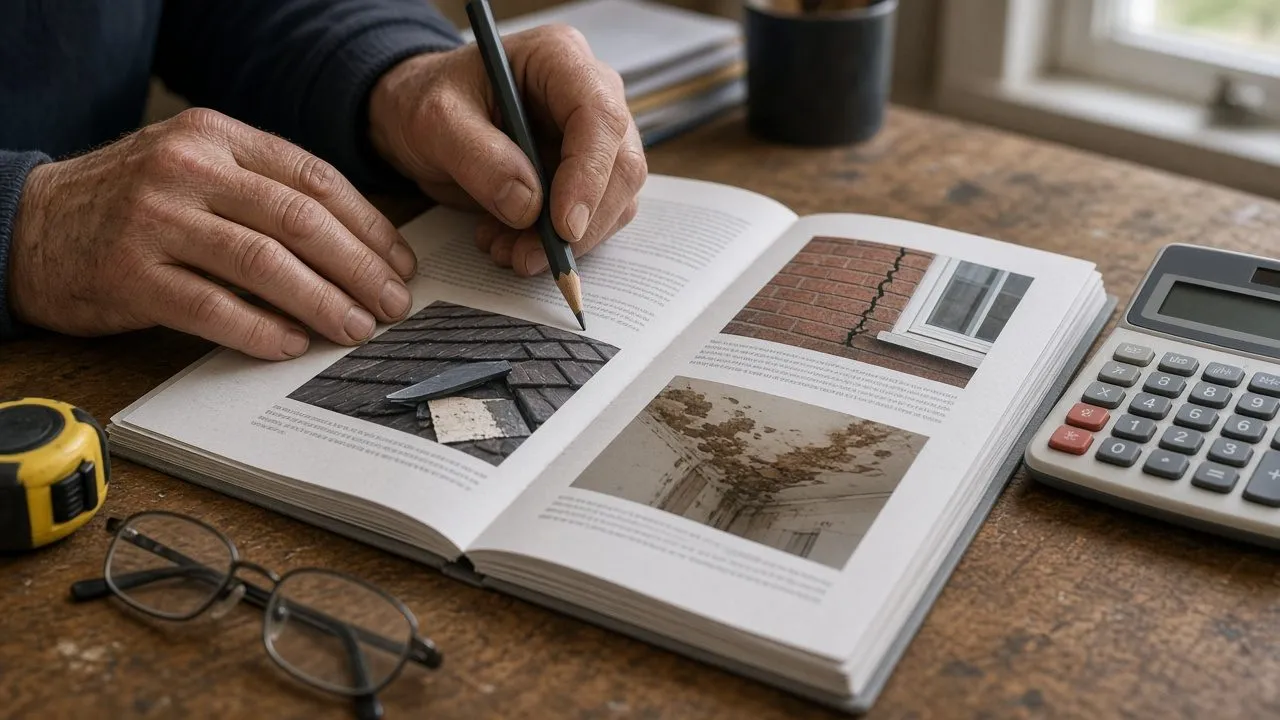
A new client told me recently that they found me by searching for a builder who would quote without coming out to the house. It's a common position to be in: a survey with red ratings in it, an exchange date coming, and builders who either won't come out or want paying just to look.
It's a fair thing to search for, and the honest answer is: not a fixed quote, no. But if you have a surveyor's or structural engineer's report, a builder can put a realistic price on every item in it without visiting, because the visit has already happened. That's what this page is about.
Why builders won't quote from photos (and why they're right)
Ask most builders to quote from a few photos and they'll say no. Trade advice to builders says the same thing: never price a job you haven't seen. They're right to be wary. A photo flattens scale, hides what's behind the surface and says nothing about access, which on a roof or chimney can be a third of the cost. A builder who quotes a fixed price from three phone pictures is either guessing high to protect himself or guessing low to win the job.
So if all you have is photos, expect a rough indication at best, and treat it as one.
Why a survey or engineer's report is different
A RICS Level 2 or Level 3 survey isn't a photo. It's the written record of a site visit by a trained professional who spent hours in the house. Your surveyor:
- walked every room and the outside of the building, and went into the loft where they could
- took damp meter readings and noted where
- measured or described crack widths and where they run
- looked at the roof covering, chimneys, gutters, windows, services and drainage
- dated what they could (the boiler, the fuse board, the roof covering)
- wrote down what they couldn't see, and why
That's most of what a builder looks at on a pricing visit. When I read a survey, I'm reading the notes from somebody else's site visit, usually a more thorough one than a builder's half-hour walk round. The surveyor's job is to describe the defect, not to price it. The RICS standard tells you to get quotes before you make a legal commitment, and leaves you to find out what the repairs cost. Pricing is the builder's half of the job, and the report gives a builder what he needs to do it.
What I can price from a report, and what I can't
What a report prices well:
- Roofs, chimneys and rainwater: slipped slates, flashings, ridge mortar, gutters, fascias, a flat roof at the end of its life
- Walls: repointing, render, lintels, a bay that has dropped, cavity wall insulation that has failed
- Damp and timber: whether the readings point to rising damp, penetrating damp or condensation, and what each fix costs
- Services: an old consumer unit, a tired boiler, lead pipework, wiring that needs an EICR
- Paperwork: alterations with no building regulations sign-off, and what it costs to put right
For small jobs I'll usually give a single figure, the way I would if you'd asked me to quote. For bigger jobs, a range, and what moves it up or down.
What a report can't price, and what I do instead:
- "Further investigation is recommended." Nobody can honestly price a repair the surveyor couldn't diagnose. I tell you which specialist you need, what they should cost, and the range the repair is likely to fall in once they've looked. For cracking that suggests movement, that means a structural engineer's report first.
- Anything hidden. Under floors, behind plaster, inside a cavity. If the surveyor couldn't see it, I can't either, and I'll say so rather than guess.
- A fixed price you can hold someone to. I don't do the work, so what you get is a builder's price for each item, not a contract. For the one or two biggest items, I'll tell you when it's worth getting a contractor in to quote properly.
Surveyor's report or structural engineer's report?
Both work, and they do different jobs.
A survey covers the whole house at a general level. It's what most buyers have, and it's what I price most often.
A structural engineer's report goes deep on one problem: usually cracking, movement, a removed wall or a roof that's spreading. A good one ends with a schedule of repairs, which is close to a specification: what to cut out, what to install, what size and where. That prices more tightly than a survey, because the engineer has already decided the method. If your engineer recommends monitoring rather than repair, I can tell you what monitoring costs and what the repair is likely to be if it confirms movement.
If you have both, send both. The engineer's report answers the question the survey raised.
When you can't get a builder in before exchange
This is usually why people end up searching for a quote without a site visit. The usual advice on getting quotes before exchange is right: get the trades round on one morning, through the agent. It doesn't always work:
- The seller won't allow it, or only one visit, and the roofer can't make that day
- Builders won't come out to price work on a house you don't own yet, or want paying to do it
- You live a long way away, and can't be there to let anyone in
- The exchange date is close, and the quotes won't come back in time
A builder's price for the whole report from the paperwork alone solves most of this. It costs nothing in access, needs nobody's permission, and comes back in a day. Then you spend your remaining time getting a proper quote for the one item that matters most, not for all twelve.
What you get back
When you send me a survey or engineer's report, I read the whole thing, then I write back as if you'd asked me to quote:
- Each issue in turn, with what it means in practice and a price against it
- What's urgent before you move in, and what can wait a year or two
- Certificates and checks to ask the seller or your solicitor for before exchange
- Works for the first six to twelve months, so you can budget beyond the urgent items
- A phone call to go through it and answer your questions
It comes back within 24 hours, for £59. There's a full example review if you want to see the format first.
As an illustration of the kind of figures involved, from the same price data as the site's survey repair cost calculator:
- Slipped or missing slates: about £250–£900
- Chimney repointing and new flashings: about £900–£3,500
- Leaking or falling gutters: about £300–£2,500
- A failed lintel over a window: about £900–£3,500
- New consumer unit with RCD protection: about £700–£1,500
- Cracking flagged for further investigation: a structural engineer first, usually £500–£1,200, before anyone prices a repair
Using the prices
Once every item has a price, you have three options, all open until exchange in England, Wales and Northern Ireland: go ahead, renegotiate, or walk away. The survey renegotiation calculator turns the urgent items into a fair figure to ask for, and should I pull out after a bad survey? covers the harder decision.
If your lender has held money back or down-valued because of the survey, the prices matter even more: mortgage retentions and down valuations explains what to do with them.
In Scotland the order is reversed. The Home Report comes before your offer, so send it to me before you offer, not before exchange.
Haven't offered yet, and no survey to send? A builder's ballpark figure from the listing and your viewing photos is the step before this one.
Why I don't do the work
I'm a carpenter by trade and I've run building jobs for years, but Chat to Your Builder doesn't quote for, carry out or refer the work in any report I price, and takes no referral fees. That's the point: a builder who wants the job has a reason to price high, or low. I don't.
Frequently asked questions
Can a builder give a quote from photos alone?
An indication, rarely a fixed price. Photos hide scale, access and whatever is behind the surface, which is why most builders won't price from them. A RICS survey or structural engineer's report is different: it is the written record of a professional's site visit, so a builder can price each item from it without going back.
Can you price my survey without visiting the property?
Yes. Send the whole report and any photos you have. I price every item: a single figure for small jobs, a range for bigger ones, and for anything the surveyor couldn't diagnose, the cost of the investigation plus the likely range of the repair. You get it in writing within 24 hours, with a call, for £59.
Is a price from a report good enough to renegotiate with?
For most items, yes. Sellers respond to a short list of urgent items with a cost against each, more than to a long survey. For the single biggest item, a written quote from a contractor makes your case stronger, and I'll tell you which item that is.
My surveyor says get quotes before exchange. Does a builder's price from the report count?
It does what that advice is for: you know what the repairs cost before you're legally committed. If there's time, get a contractor to quote the one or two largest items as well. I'll tell you which ones are worth it, so you don't spend your last weeks chasing quotes for gutters.
Can you price a structural engineer's report?
Yes. A good engineer's report ends with a schedule of repairs that says what to do and how, so it prices more tightly than a survey. Send it together with the survey if you have both.
Will you do the work?
No. Chat to Your Builder never quotes for, carries out or refers the work in a report it has priced, and takes no referral fees. That's what makes the prices independent.
Work it out yourself
Free tools built on real 2026 builder rates. No sign-up, no email.