Lintel problems: the signs, the causes and what a repair costs
A lintel is the beam over a door or window that carries the wall above it. When one starts to fail, the brickwork tells you: a stepped crack from the corner, a dip in the courses, a window that won’t shut. I’m Ben Murrell, a builder for nearly 30 years, and I’ve replaced more of these than I can count. This is what to look for and what it usually costs.
Last updated October 2026 · England and Wales
What’s above your window depends on the age of the house
Before you can judge a lintel you need to know what kind you probably have. As a rough guide from what I find when I open walls up:
- Victorian and Edwardian houses often have a brick arch or a stone head on the outside, with a timber lintel behind it carrying the inner part of the wall. Timber that has been damp for years can rot out of sight.
- Mid-century houses often have concrete lintels, sometimes cast with the reinforcement too close to the surface.
- Newer houses usually have steel lintels built into the cavity wall. They last well when detailed properly, but corrosion can set in where water has been getting in for a long time.
- Any age: an opening that was widened, or a window replaced, can have ended up with a lintel that is too short or missing altogether.
Signs it’s the lintel, not something bigger
| What you see | What it often means |
|---|---|
| Stepped crack rising from one or both top corners of the opening | The lintel is deflecting, or its ends are not bearing properly |
| Bricks above the opening dipping, bowing or dropped | Lintel failure or no lintel at all |
| Horizontal crack along the lintel line, rust staining, brick pushed out | Often a corroding steel lintel |
| Soft, damp or crumbling timber behind a brick arch, inside or out | Rotting timber lintel. See rotten window frames if the frame has gone too |
| Tapering diagonal cracks at several openings, doors sticking around the house | Possibly wider movement rather than one lintel. See cracks above doors and windows |
BRE notes that crack width alone is a simplification, and that several factors, including whether cracks are getting wider over time, affect how damage is classified (BRE). If you are not sure, monitor the crack for a few months and use our crack severity checker.
What it looks like in a real house
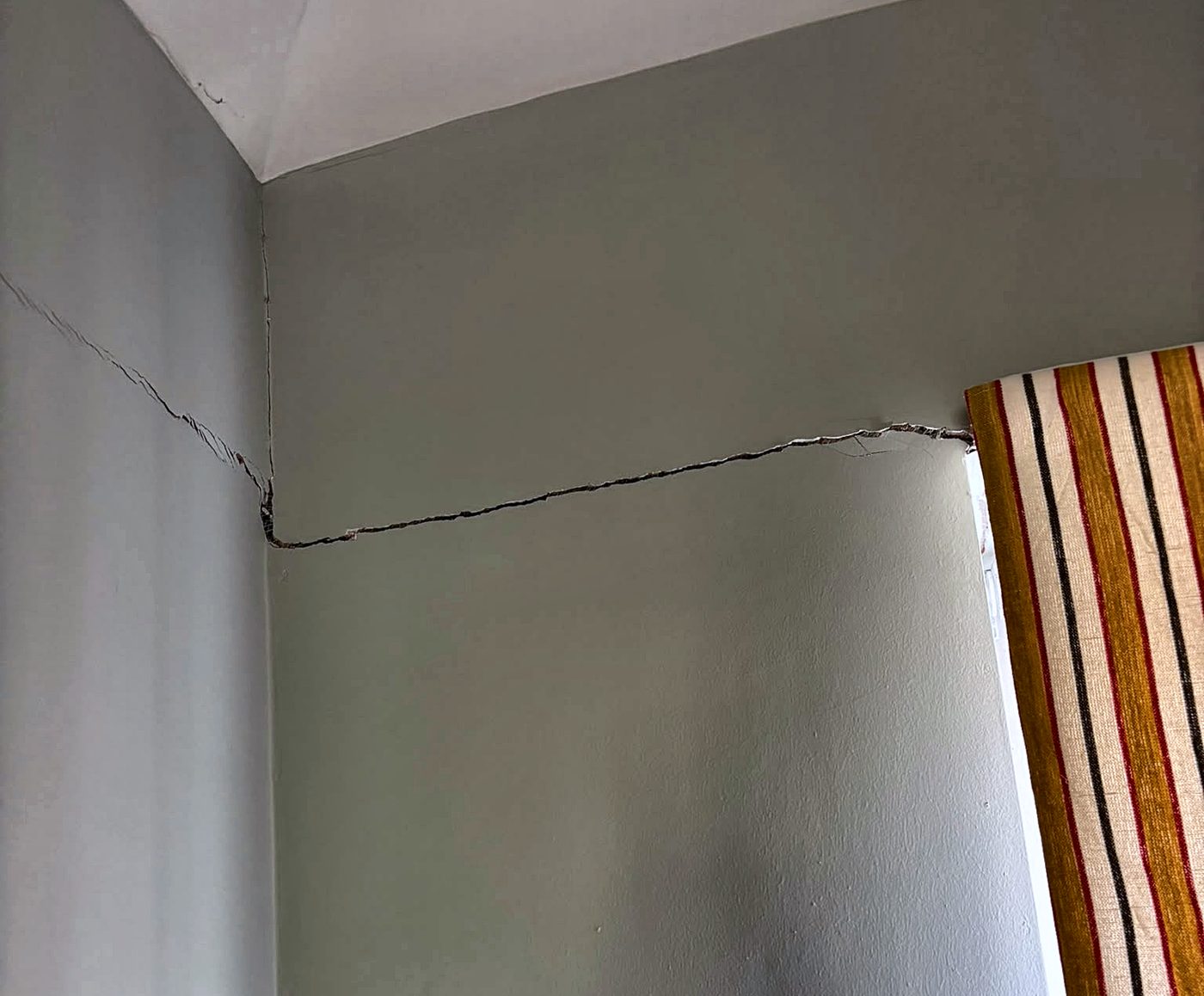
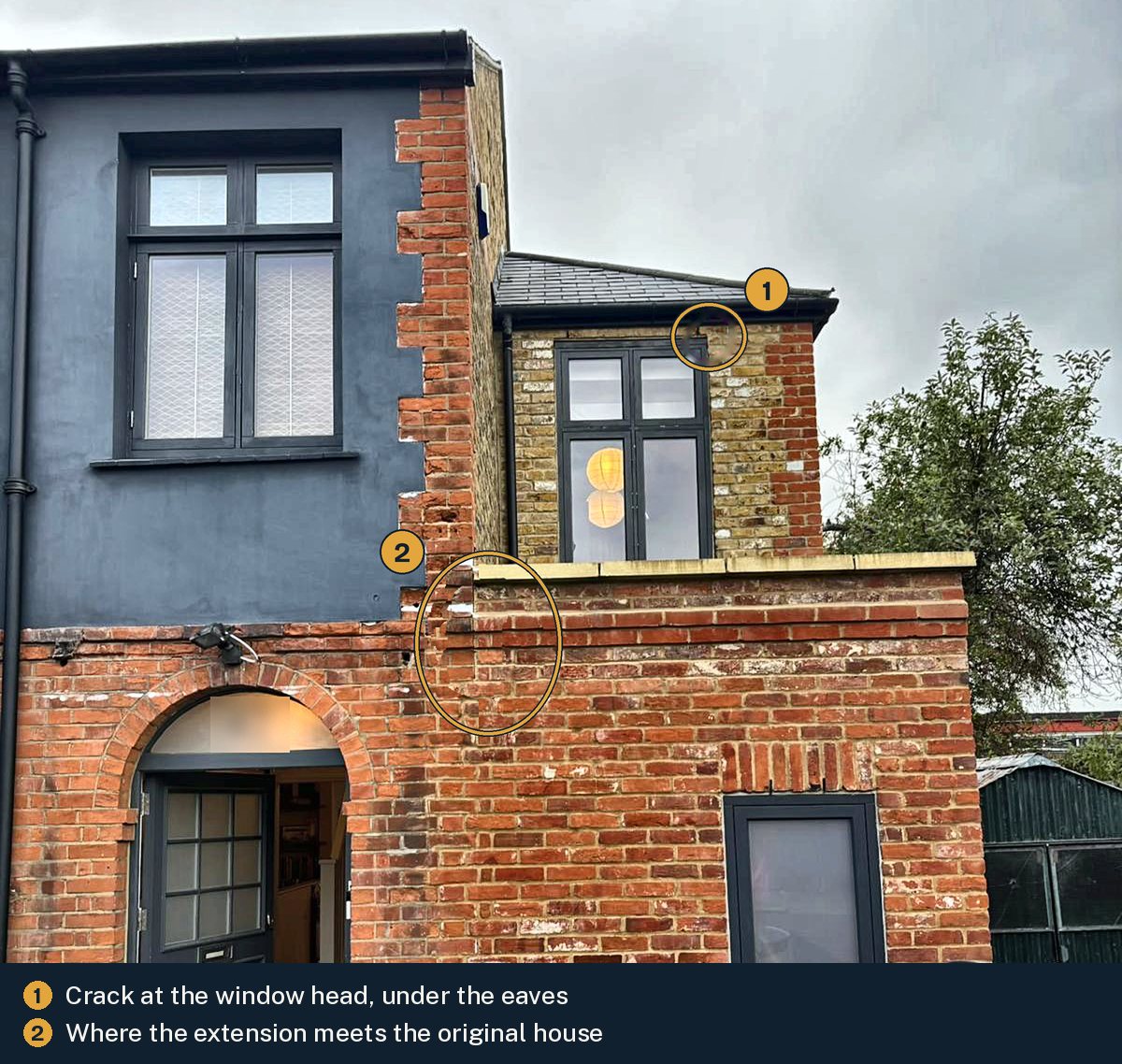
How a lintel gets fixed
- Confirm the cause. Make sure it’s the lintel and not wider movement. If there’s any doubt, a structural engineer’s visit is money well spent: see what a structural engineer’s report covers.
- Check the paperwork side. It’s structural work, so ask building control whether it needs approval before anyone starts (GOV.UK). Our building regulations checker helps with the questions to ask.
- Support the wall. The brickwork above is propped while the old lintel comes out.
- Fit the new lintel with proper bearing at each end, plus a cavity tray and weep vents on a cavity wall, so water is sent outwards rather than onto the new steel.
- Make good. Rebuild the brickwork above, matching bricks and mortar where you can, then repair the plaster inside.
Where the lintel is sound and the cracking is old and stable, repointing and filling may be all that’s needed. Don’t let anyone replace a lintel that isn’t the problem. Before you hire someone for it, here’s how to check a builder: company, insurance and reviews.
What it typically costs
| Work | Published range | Source |
|---|---|---|
| Replacing a lintel over a standard window or door | £650–£1,000 on average | Checkatrade |
| Lintel replacement, whole project | £500–£2,500 depending on span, access and material | MyBuilder |
| Scaffolding for work above ground floor | £400–£1,200 extra | MyBuilder |
| Structural engineer’s report | See our guide | Structural engineer report cost |
These are national guide figures from the sites named, not quotes. Bay windows, wide openings, stone heads and upper floors tend to cost more. If the lintel is over a bay, read bay window cracking as well.
If you’re buying a house with lintel cracking
Your surveyor is right to flag it. Ask the seller, through your conveyancer, when the windows were replaced and for any building regulations or competent-person certificate that came with them. Get the lintel priced before exchange and use the figure in your negotiation; our guide to negotiating after a survey covers how. If several openings are cracked, or the survey mentions movement, get the whole picture first: should I pull out after a bad survey?
Frequently asked questions
What are the signs of a failed lintel?
The usual signs are a stepped or diagonal crack rising from one or both top corners of a window or door, a horizontal crack along the line of the lintel, bricks above the opening that have dropped or bowed, and a window or door that has started to stick. Rust staining or brickwork pushed out above a steel lintel, or soft, damp timber behind the brickwork on an older house, are also worth having looked at.
How much does it cost to replace a lintel in the UK?
Checkatrade puts replacing a lintel over a standard-size window or door at £650 to £1,000 on average. MyBuilder gives £650 to £1,000 for standard openings, with total costs from £500 to £2,500 depending on span, access and material, and says scaffolding adds £400 to £1,200 when the work is above ground. Wide openings, bay windows and period houses usually cost more.
Do I need building regulations approval to replace a lintel?
In most cases, yes. A lintel holds up the wall above, so replacing one is structural work, and LABC says all structural alterations need building regulations approval. Check with your local authority building control or a registered building control approver before the work starts, and keep the paperwork for when you sell.
Can a lintel be repaired instead of replaced?
Sometimes. If the lintel is sound and the cracking is old and stable, repointing or filling may be all that is needed. A rotten timber lintel, a steel lintel that has rusted badly, or an opening with no proper lintel at all usually needs a replacement, with the wall above supported while the work is done.
Is a lintel problem a reason not to buy a house?
Usually not on its own. A single lintel is normally a contained repair that can be priced before exchange. Get it costed, ask the seller when windows were replaced and for any building regulations paperwork, and use the figure in your negotiation. Several failed lintels, or lintel cracking alongside other signs of movement, is worth a structural engineer’s view first.
Sources
Free tools that go with this
Grade the crack, and check what approval a lintel replacement needs.