Cracks above doors and windows: what they mean and when to worry
A crack above a door or window is one of the things people send me most. Openings are the weak points in a wall, so old settlement, seasonal movement, a tired lintel or, less often, ground movement all tend to show there first. I’m Ben Murrell, a builder for nearly 30 years. This is how I’d read yours before spending a penny.
Last updated October 2026 · England and Wales
Why cracks start at doors and windows
A wall is strongest where it is solid. Cut a hole in it for a door or window and the corners of that hole become the place where any movement concentrates. So when a house moves at all, whether that is a hundred years of settling, a dry summer on clay, or a lintel that is starting to give, the first crack usually appears at a corner of an opening.
These are the causes I see most, roughly from the most common to the least:
- Plaster and decoration cracks. A fine horizontal crack along the top of the frame, or at the joint between the lintel and the plaster, inside only. Usually cosmetic.
- Seasonal and thermal movement. Fine cracks that open a little in summer and close in winter. Our guide to subsidence, settlement or thermal movement explains the difference.
- Lintel problems. A lintel that is missing, too short, rotting (timber) or rusting (steel). Look for sagging brickwork, a stepped crack from the corner, or a horizontal crack along the lintel line.
- Alterations. An opening that was widened, or a new window fitted, without the support above being checked. GOV.UK lists replacing windows and doors among the jobs that may need building regulations approval (GOV.UK), which is one reason to ask for the paperwork.
- Ground movement. The least common, and the one people fear most. The pattern is usually a tapering diagonal crack, often visible inside and out, with doors or windows starting to stick.
How to read the crack in front of you
| What you see | What it often means | What I’d do |
|---|---|---|
| Hairline crack along the top of the frame, inside only | Plaster or decoration crack | Fill and redecorate. Note the date. |
| Fine crack from the corner that opens and closes with the seasons | Thermal or seasonal movement | Monitor through a winter and a summer |
| Stepped crack rising from a top corner, or dropped bricks above the opening | Often a lintel problem | Get a builder or engineer to look at the lintel |
| Tapering diagonal crack, visible inside and out, doors sticking | Possible ground movement | Monitor it. If it is widening, contact your buildings insurer, who will usually arrange a structural engineer |
| Crack wider than about 5mm, or getting wider | Beyond cosmetic on the BRE scale | Don’t just fill it. Find the cause first |
BRE is clear that width is a simplification: whether the crack is getting wider over time matters as much as how wide it is today (BRE). Our crack severity checker walks you through width, shape and behaviour in a couple of minutes.
Three real cracks around windows, and how I’d read them
These are real photographs, not stock images. They show the patterns people describe to me most often, and what I’d look at in each before deciding whether it matters.
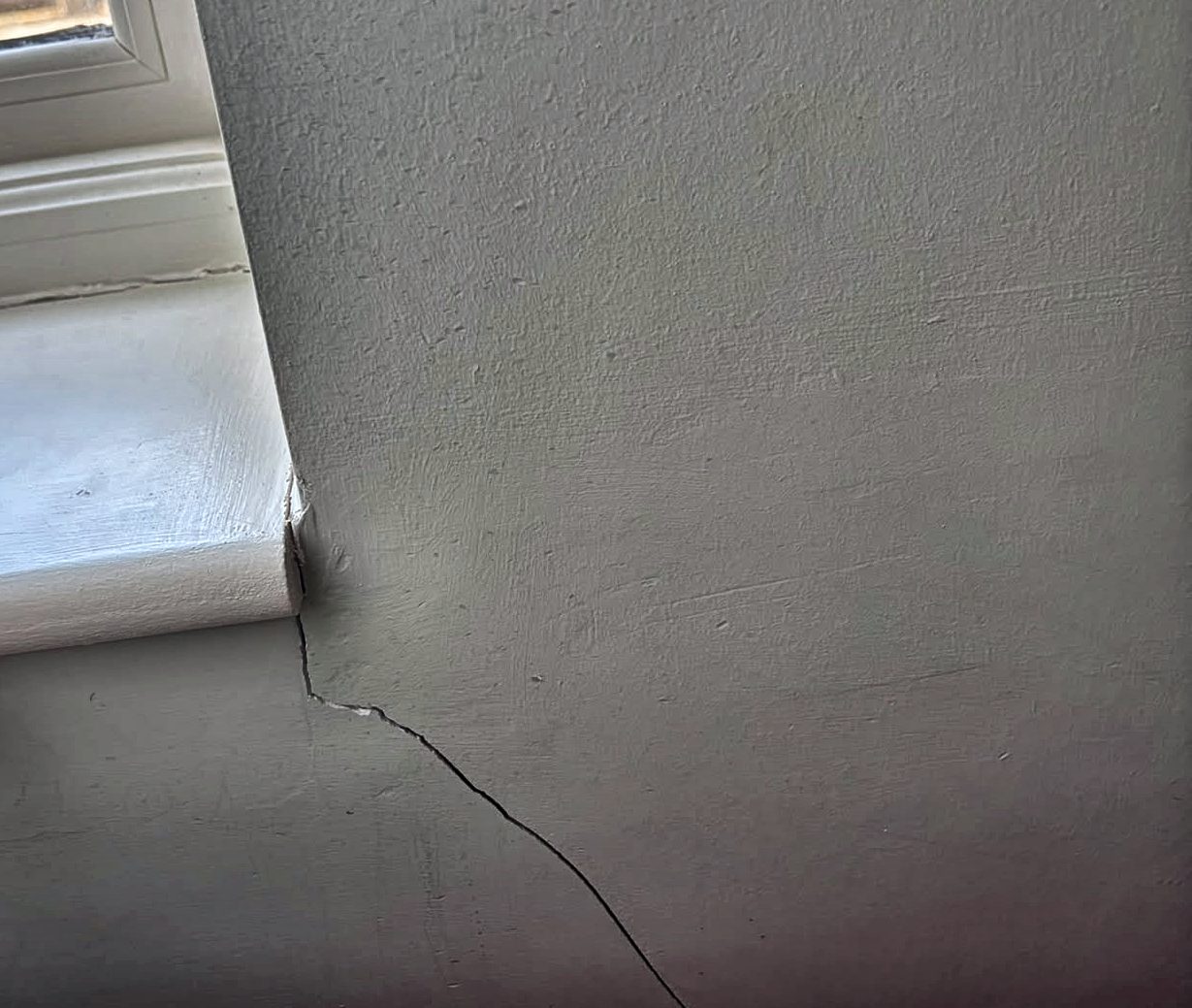
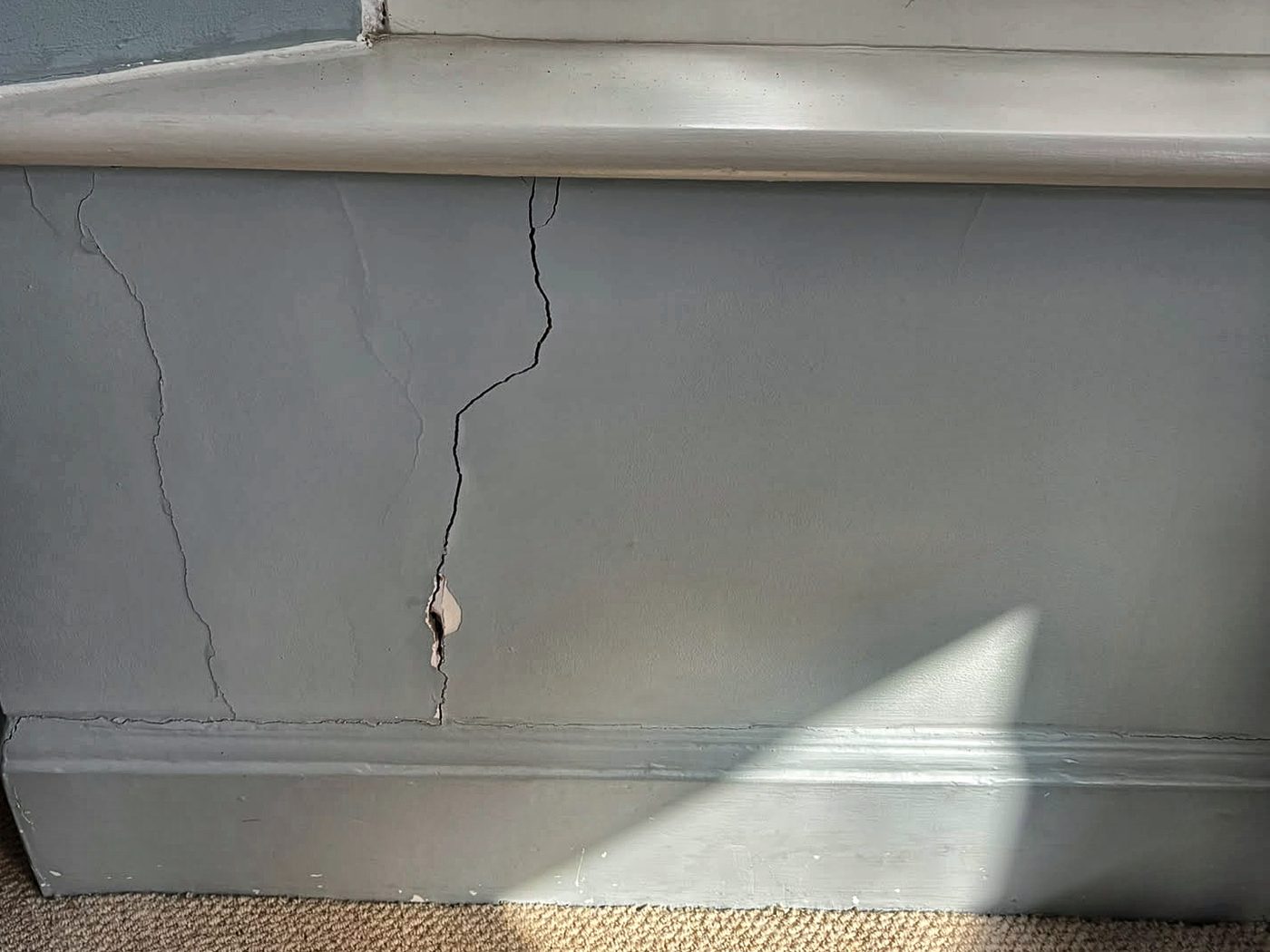
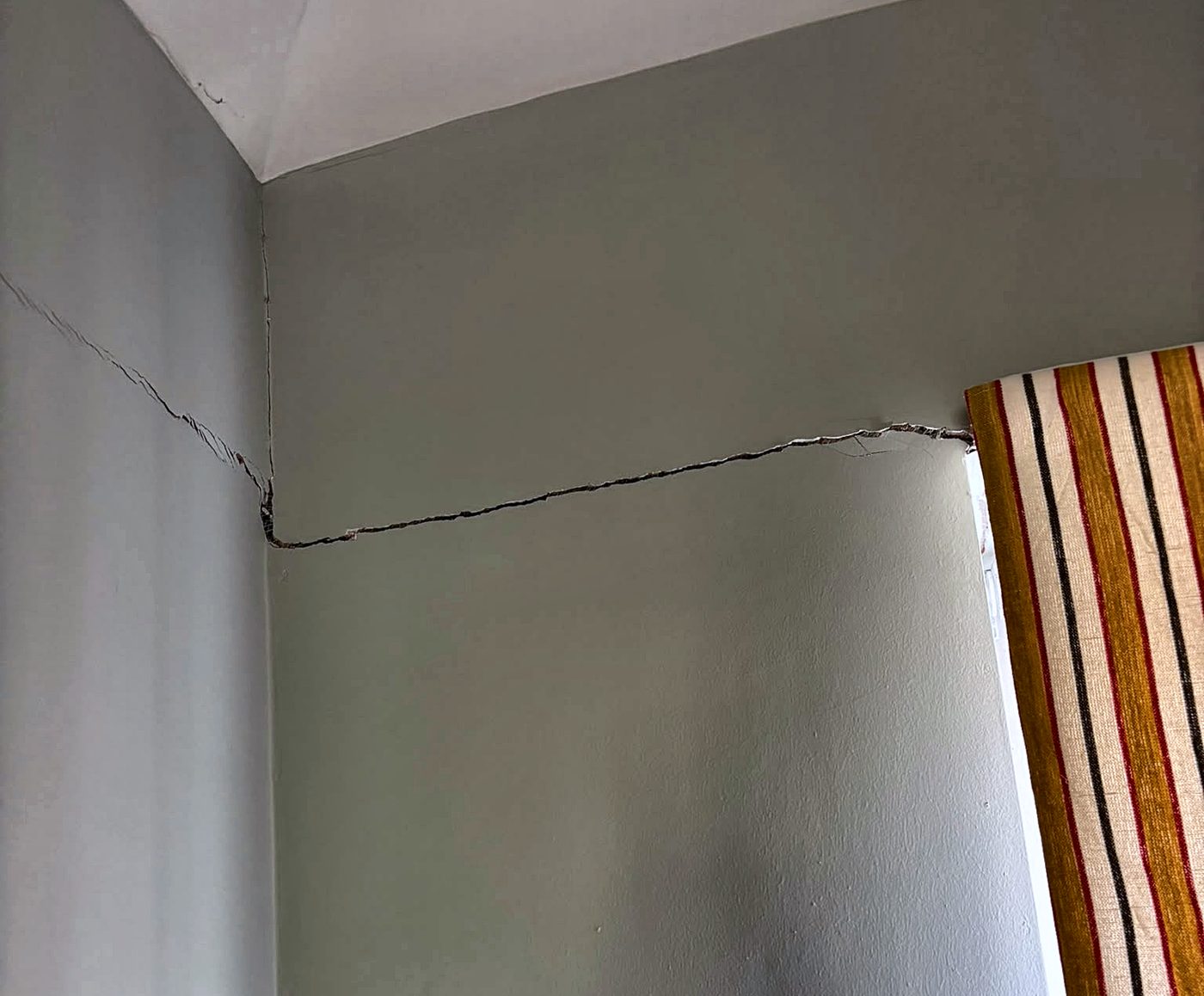
Got one that looks like these? Send me a photo. One crack, one photo, one straight answer, free.
Monitor it before you pay anyone
- Pencil a short line across each end of the crack and write the date next to it.
- Photograph it with a ruler or tape measure held against it, from the same spot each time.
- Measure the width at the top, middle and bottom, and write the numbers down.
- Repeat monthly, ideally across a change of season, and note whether the nearest door or window still opens freely.
If an engineer is needed later, that record makes the visit quicker and more useful. RICS notes that monitoring can run for as long as 12 months (RICS subsidence guide).
If you’re buying
Your surveyor is right to flag cracking over openings, and the wording tells you how concerned they were. “Consistent with historic movement” is a very different note from “recommend further investigation by a structural engineer”. Ask the seller, through your conveyancer, whether the cracks have been filled before, whether windows were replaced and when, and whether there has ever been an insurance claim for movement. If the survey recommends an engineer, read what a structural engineer’s report covers, and if there is any history of subsidence, see buying a house with past subsidence.
What repairs typically cost
The fix depends entirely on the cause, so price the cause, not the crack:
| Work | Typical range | Source |
|---|---|---|
| Filling and redecorating a cosmetic crack | Part of normal decoration for BRE categories 0–2 | BRE |
| Replacing a lintel over a standard window or door | £650–£1,000 on average; more for wide openings, upper floors or where scaffolding is needed | Checkatrade, MyBuilder. See lintel problems |
| Structural engineer’s report | See our guide | Structural engineer report cost |
| Underpinning, only for confirmed ongoing subsidence | £10,000–£75,000 for a typical house (RICS whole-house figure). Smaller localised schemes can cost less | RICS subsidence guide. See our underpinning guide |
RICS says it is estimated that fewer than 5% of properties suffering from subsidence need underpinning, so a crack over one window is very rarely an underpinning job. For the cracks on the rest of the house, the RICS survey repair cost calculator gives our typical 2026 ranges. If you’re getting a lintel or repair priced, take five minutes to check the builder is legit before you say yes.
Frequently asked questions
Is a crack above a door frame serious?
Usually not. Fine cracks at the corners of door and window openings are very common, because openings are where a wall is weakest and where small movements show first. BRE treats cracks up to about 5mm as generally aesthetic. It becomes worth investigating if the crack is wider than that, is getting wider, tapers, shows on both sides of the wall, or the door has started to stick.
Why is there a diagonal crack coming from the corner of my window?
Corners of openings concentrate stress, so any movement in the wall tends to crack there first. A fine diagonal crack that has been filled and stayed filled is usually old movement. A diagonal crack that steps up through the mortar, widens over time, or comes with dropped brickwork above the opening is worth a closer look, because it can point to a lintel problem or ground movement.
Does a crack above a window mean the lintel has failed?
Not necessarily. Many cracks over openings are plaster or decoration cracks along the line of the lintel. Signs that point more strongly to the lintel are sagging or dropped bricks above the opening, a stepped crack rising from one or both top corners, and a window or door that has started to bind. A builder or structural engineer can tell you which you have.
Should I worry if my doors have started sticking as well?
It is worth checking. RICS lists doors or windows sticking for no obvious reason alongside new or expanding cracks as signs there could be movement in the ground. Swelling timber after wet weather is the more common cause, so note when it started and whether the cracks near that door are changing before you spend money.
Can I send Chat to Your Builder a photo of the crack?
Yes. One crack, one photo, one straight answer is free through the free question page. If you are buying and want the whole RICS survey read and costed, that is the £59 builder review. We don’t visit, we don’t replace a structural engineer, and we never quote for or carry out the work.
Sources
Free tools that go with this
Grade the crack, and check whether past work on the opening needed approval.